What are varicose veins?
Varicose veins are enlarged, twisted veins that often appear on the legs as bulging, rope-like cords. They form when the small valves inside the veins stop working properly, allowing blood to pool instead of flowing efficiently back to the heart. This pooling is called venous reflux, or venous insufficiency.
For many patients they are more than cosmetic — they cause aching, heaviness, or swelling that affects daily life. Learn more about the condition itself on our varicose veins condition page.
Common symptoms
- Aching, heaviness, or fatigue in the legs
- Throbbing, cramping, or burning
- Swelling in the lower legs or ankles
- Itching or restlessness in the legs
- Skin discoloration near the ankles
- Bulging, rope-like veins on the legs
Causes and risk factors
Several factors can contribute to varicose veins:
- Family history of vein disease
- Pregnancy or hormonal changes
- Prolonged standing or sitting at work
- Increasing age
- Excess body weight
- Prior leg injury or surgery
When varicose veins may be medical
Varicose veins may be considered medical — rather than purely cosmetic — when they are accompanied by symptoms such as pain, heaviness, swelling, itching, skin changes, or ulcers near the ankle. In those cases, an ultrasound is typically used to look for venous reflux before any procedure is planned.
How ultrasound guides the next step
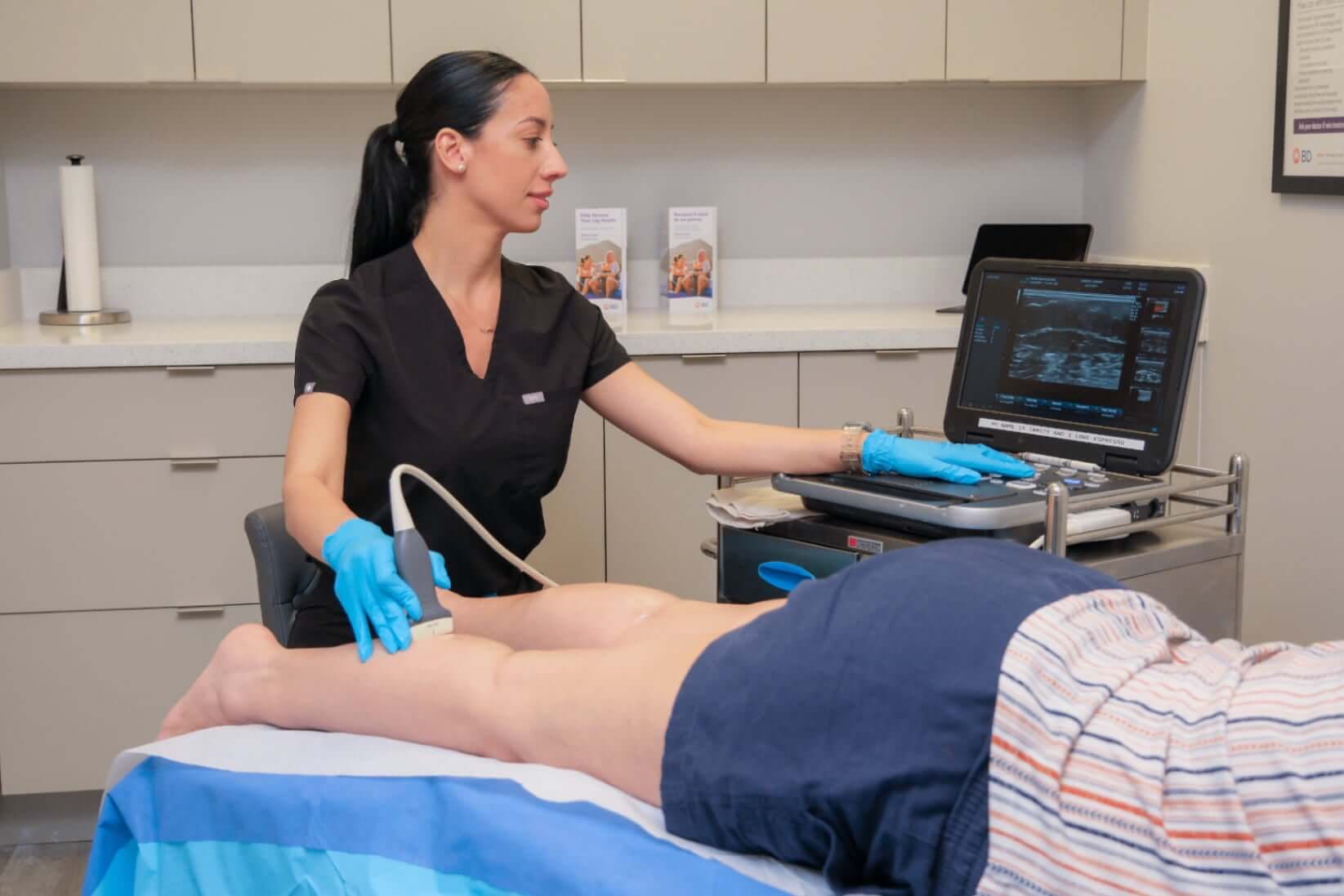
A duplex ultrasound shows how blood moves through the veins in your legs. It identifies which veins are refluxing and helps the care team recommend evaluation-only follow-up, compression, or a specific procedure when appropriate.
Treatment choices after evaluation
There is no single best procedure for every patient. After consultation and imaging, options may include thermal closure, nonthermal closure, injection therapy, phlebectomy, or continued conservative care. Use the links below for procedure detail — this overview stays focused on choosing the right path.
EVLT
Laser closure of a refluxing vein under ultrasound guidance — procedure detail, candidacy, and recovery.
View procedure detailsRFA
Radiofrequency energy seals a refluxing vein. Often considered alongside EVLT based on anatomy.
View procedure detailsVenaSeal
Medical-adhesive closure for selected refluxing veins, typically without heat.
View procedure detailsInjection options
Sclerotherapy or foam treatment for smaller or branching veins when appropriate after evaluation.
View procedure detailsWhat to expect from the process
Consultation
We review symptoms, examine your legs, and decide whether ultrasound is needed before recommending any treatment.
Imaging & plan
When reflux is found, we explain medical versus cosmetic elements and which procedures may fit your anatomy.
Next steps
You receive a clear plan — which may include compression, a procedure page to review, insurance verification, or observation.
Insurance and medical necessity
Treatment for symptomatic venous disease may be covered when your plan's requirements are met. Cosmetic-only care is usually self-pay. Benefit verification explains likely patient costs; it does not guarantee payment. See our insurance page for details.